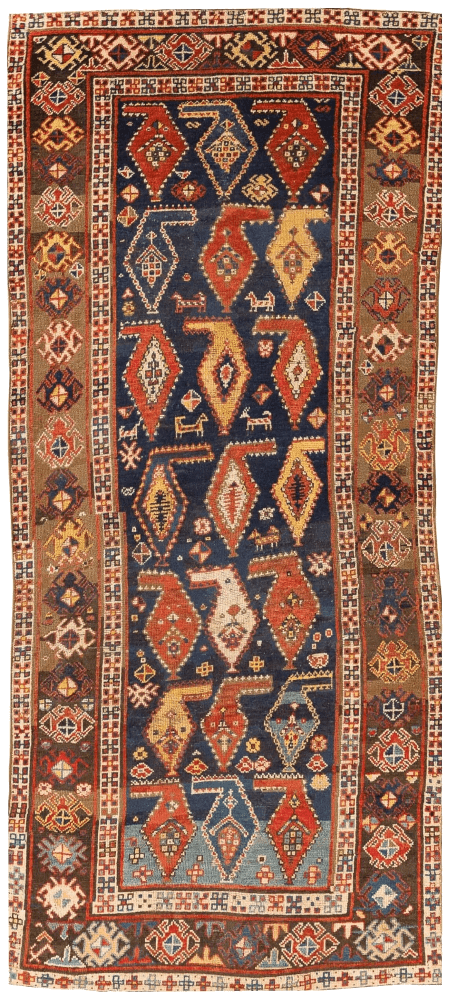
An antique Karabagh rich in geometric invention. On the dark blue field — deepened by abrash that lends the surface real depth — three horizontal rows and seven columns of botéhs hang from their straps, which flip direction line by line, setting the whole field in gentle counter-sway. Within each botéh, the weaver placed a different geometric filling; between them, stylized animals and small devices roam freely. Two minor borders of flattened cubes guard the field, while the main border parades stylized crabs, each with a geometric heart. A rug you read like a page — and reread.
The genuine abrash lightening the field and the fact that no two boteh repeat — each with its own geometric filling — are marks of authorial 19th-century weaving.



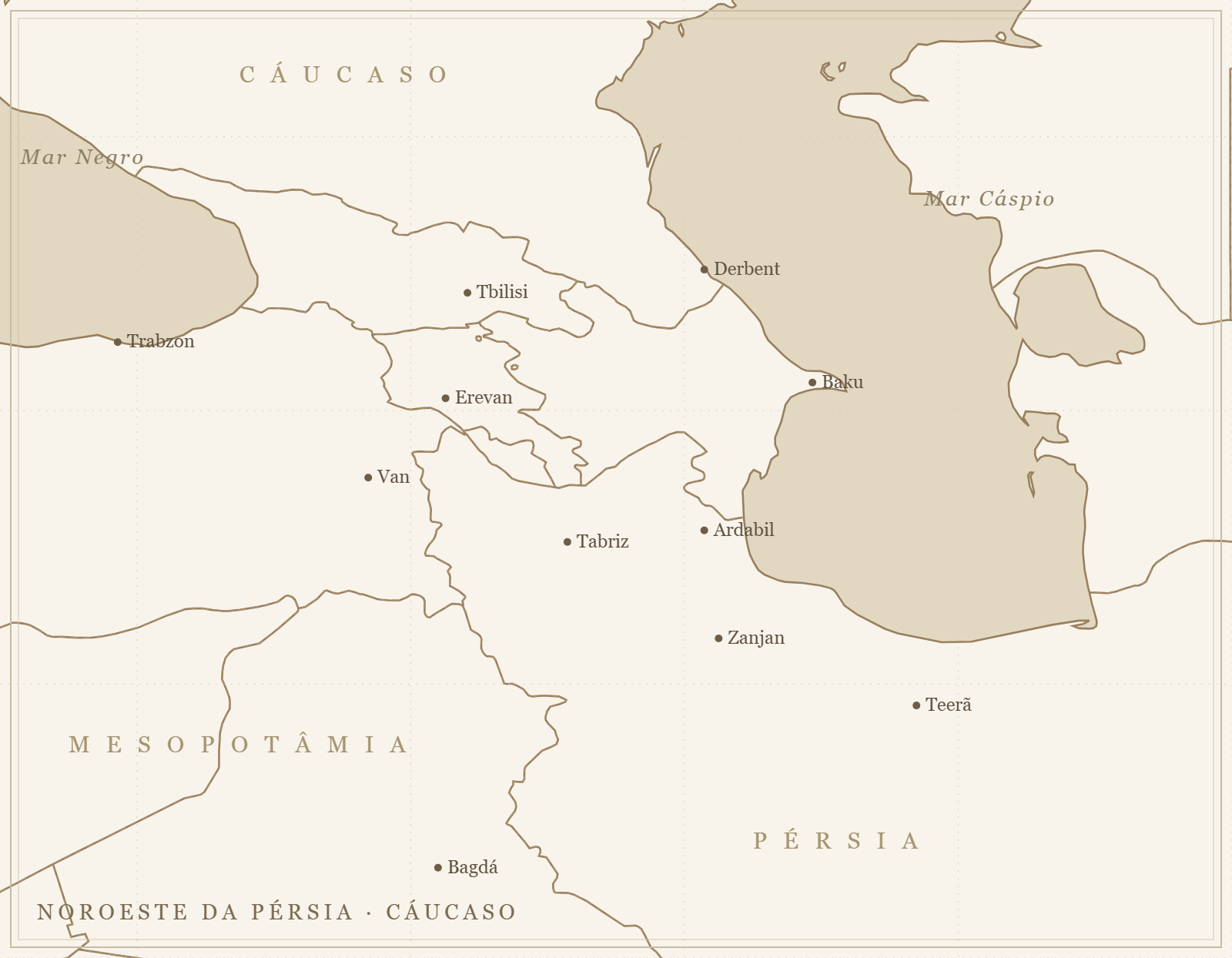 Karabakh