
A genuine Persian rug is made almost entirely by hand, and the process has barely changed in centuries. From raw fleece to the final wash, a single piece can take anywhere from a few months to several years. Understanding how one is made is the surest way to see why a real hand-knotted rug is worth what it is — and how to tell it from a machine-made copy.
From fleece to yarn
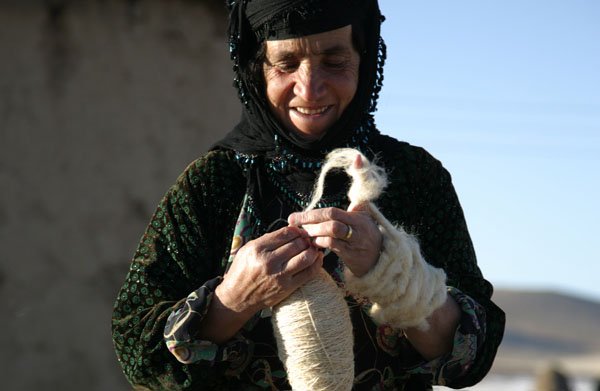
It begins with wool. Sheep are shorn, the fleece is cleaned and combed, and the fibres are hand-spun into yarn on a simple spindle or wheel. Hand-spun wool is slightly uneven, and that irregularity is a virtue: it takes dye a little differently along its length, giving antique rugs their soft, living colour. The finest pieces use lustrous highland wool, silk, or silk highlights on a wool ground.
Natural dyes
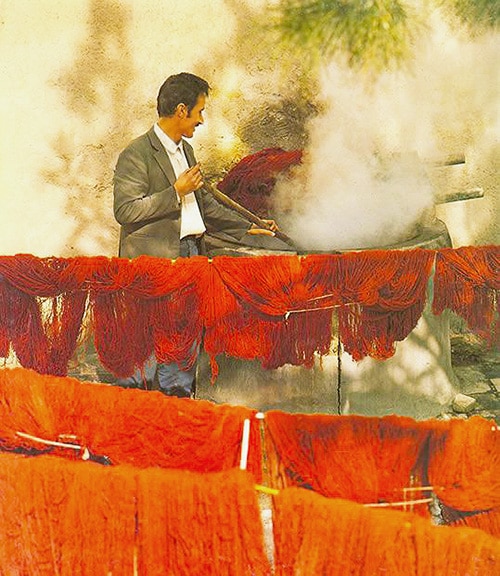
The spun yarn is then dyed, and in the best rugs the dyes are natural. Reds come from the madder root, blues from indigo, yellows from weld and vine, and countless shades from combining these with mordants that fix the colour. Natural dyes age beautifully, mellowing into the warm, luminous tones collectors prize. The gentle variation you see across an antique field — the abrash — comes from dye lots mixed by hand, batch by batch.
The loom and the knot
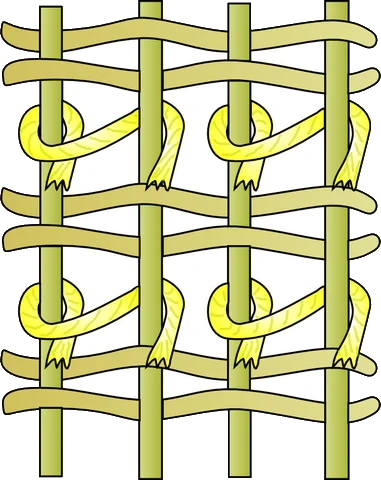
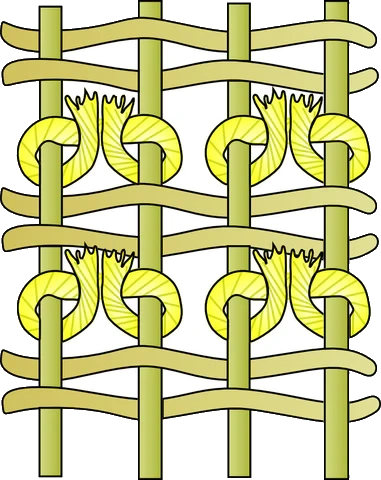
The weaver strings vertical threads — the warp — onto a loom, and the rug is built one knot at a time across them. Persian rugs use the asymmetrical (Persian, or Senneh) knot; many tribal and Caucasian rugs use the symmetrical (Turkish, or Ghiordes) knot. Each knot is tied by hand around a pair of warps and cut. A fine city rug can carry hundreds of knots per square centimetre, a village or tribal rug far fewer — and the knot count is set here, once, for the life of the rug.
Weaving, row by row
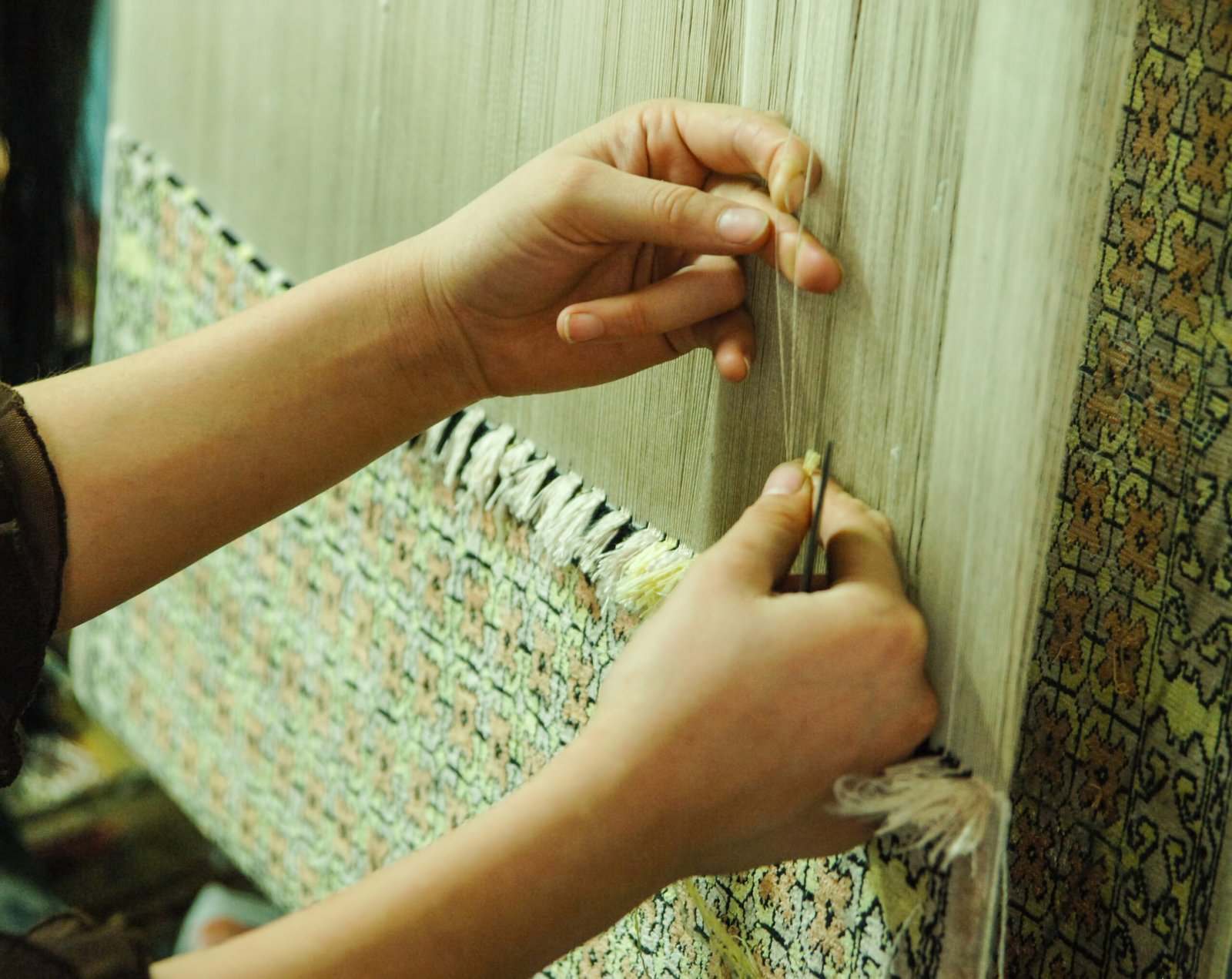
After each row of knots, one or more horizontal threads — the weft — are passed across and beaten down hard with a comb to lock the row in place. The pattern grows gradually from the bottom up, the weaver following a design, or working from memory and tradition. A skilled weaver ties thousands of knots a day, yet a single finely knotted rug can still take a year or more to finish.
Finishing: shearing, washing and the fringe
Once off the loom, the pile is sheared to an even height — lower for fine rugs, longer for bold tribal weaves. The rug is washed to clean it and settle the colours, and traditionally laid in the sun to dry, which softens and blends the tones. The warp threads left at each end become the fringe — not a decoration added on, but the very foundation the whole rug is tied to.
Handmade or machine-made?
The surest test is the back. On a genuine hand-knotted rug the pattern is clearly visible on the reverse and the knots are slightly irregular, and the fringe is an extension of the rug itself. A machine-made rug has a perfectly uniform back, often a serged or glued-on fringe, and a synthetic evenness no hand can produce.
Quick answers
How long does it take to make a Persian rug? Anywhere from a few months for a small, coarser piece to several years for a large, finely knotted one.
Are Persian rugs really made by hand? Yes — a genuine Persian rug is hand-knotted, one knot at a time. Only machine-made copies are produced on power looms.
What makes a handmade rug special? Hand-spun wool, natural dyes and hand-tied knots give each piece slight, living irregularities — and a durability that lasts for generations.
Antique rugs in the Figalli collection
Every piece we offer is hand-knotted, chosen for its authenticity, age and character. Message us on WhatsApp and our team will gladly walk you through how a specific rug was made.