
Asia’s most significant development was the Silk Road, which connected China and Europe, providing a vital trade relationship between the East and the West. Cultural exchanges were made through what was not just one but a network of trade routes. Religion, technology, rugs, and silk spread from China to the Western world. Central Asia, through which the Silk Road passed, greatly benefited from the Silk Road as Chinese products were brought to the region. What would eventually become collectively known as the Silk Road began as a series of trade routes linking China to the Middle East.
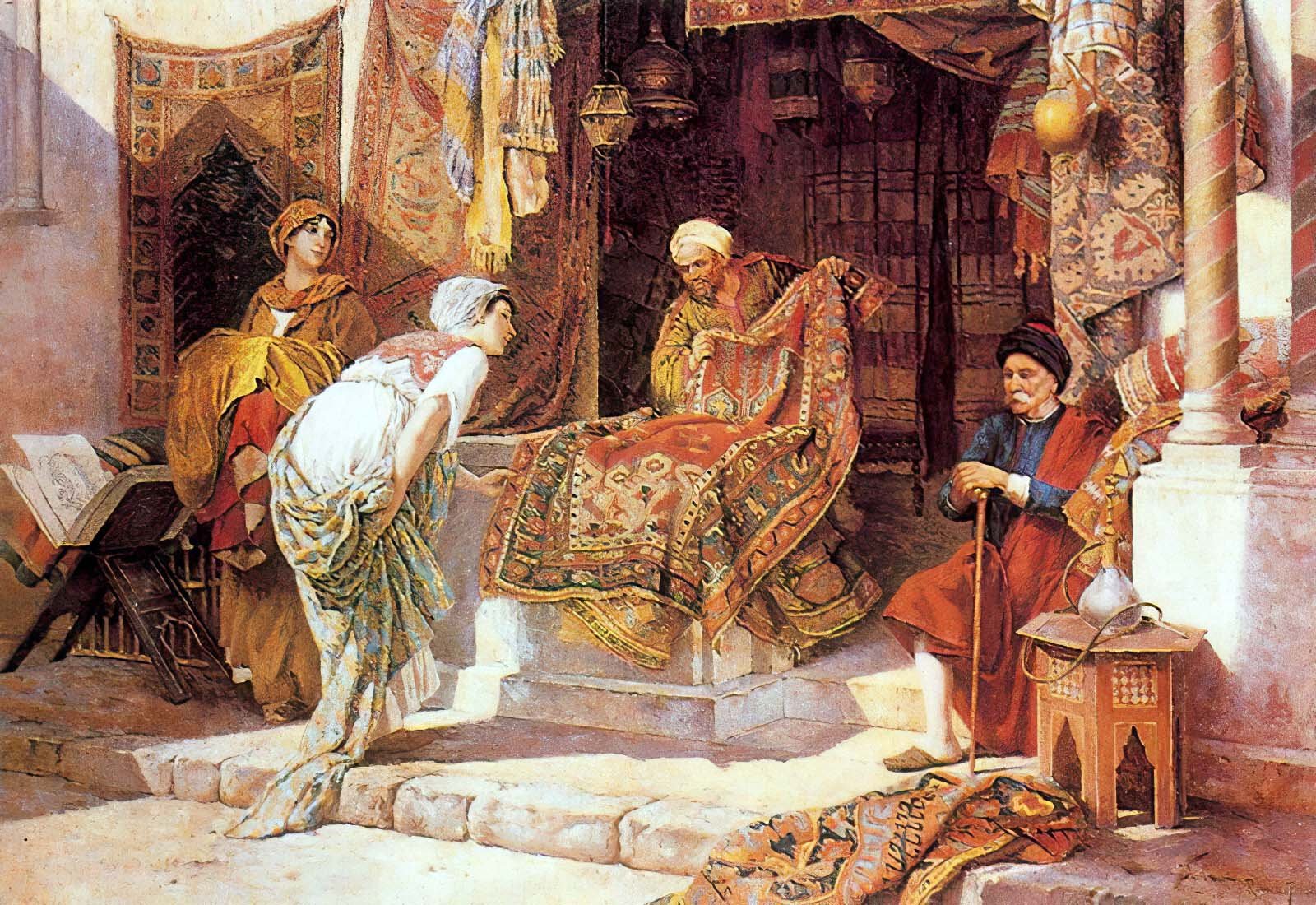
The opening of these trade routes allowed people at both ends and along its route to enjoy products and goods they had never seen or experienced before. Some of the most essential items traded along the Silk Road were spices, silk, precious stones, raw minerals, and, of course, rugs. These trade routes opened opportunities not only for traders but also for their customers. People began to enjoy a lifestyle that allowed them to expand beyond locally available goods and products. The traded goods became highly desirable and were often a sign of luxury and success.
However, the Silk Road also allowed the economic expansion of the less privileged classes. Now, they can produce and sell their products in a larger global market.
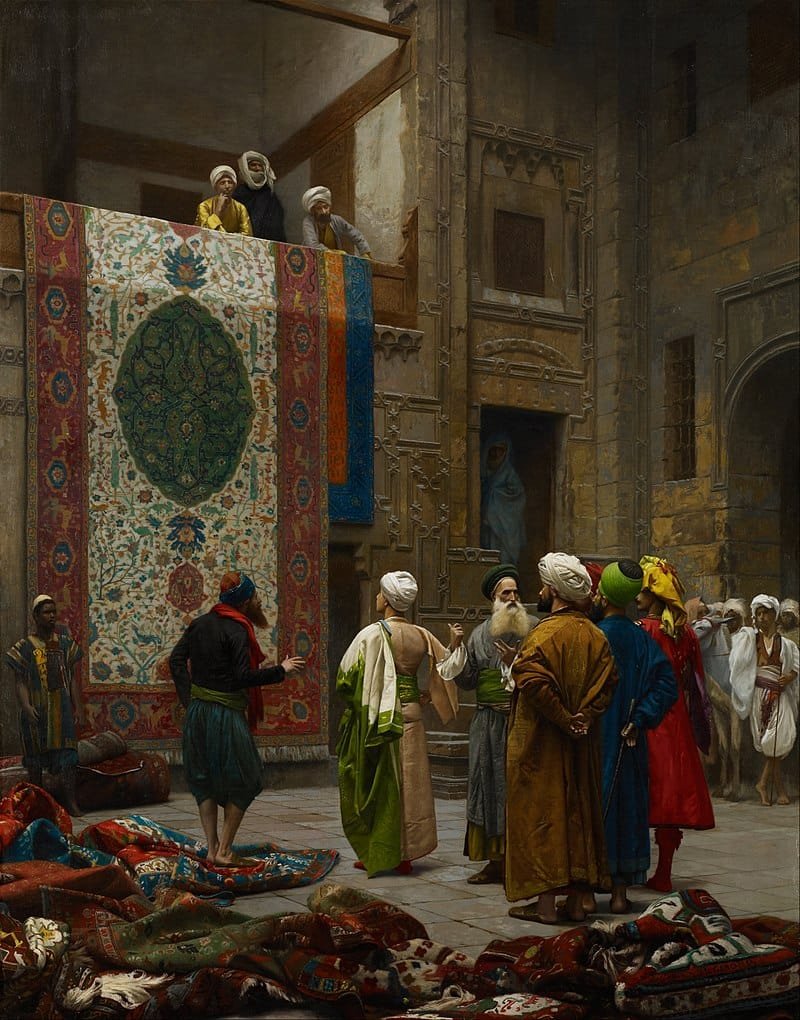
The Silk Road and the Expansion of Persian Rugs
The Silk Road’s trade routes were well established by around 1500. Caravans frequently travelled along these routes, trading and exchanging goods. During the 1500s, the Persian rulers of the Safavid Dynasty saw an opportunity to increase their wealth and the level of export products to the rest of the world.
Rugs from small Persian villages and towns were already valuable at both ends of the Silk Road. Persia was in the middle of the routes, and goods travelling in both directions often had to pass through this area. The Safavid rulers were responsible for expanding the arts and wealth of the Persian Empire.
The Safavid rulers hired some of their best artists to make rugs for export and make their art known. Persian rug weavers and designers produced exceptional-level works often displayed in public buildings and palaces. These rugs, considered valuable works of art, became a highly coveted commodity among the Persian elite and were often given as gifts in negotiations and diplomatic relations.
Many of these fine rugs reached European castles, cathedrals, and wealthy estates through these routes. Persian artists were instructed to establish schools and pass these designs on to rug weavers in small villages. Persian rug weavers were taught to make high-quality rugs with an exquisite aesthetic never seen before.
The Silk Road gave rug manufacturers easy access to a distribution channel eager for everything they could produce. It eventually led to establishing schools and production centres in cities like Tabriz, Isfahan, Kerman, and many other non-Persian weaving centres conveniently located near routes like the Khotan rugs of Eastern Turkestan in present-day China. It marked the beginning of the Golden Age of the Safavid Dynasty and the First Golden Age of the Persian Rug industry.
Importance of the Silk Road today
The name Silk Road was officially used for the first time in 1877 by Ferdinand von Richthofen, who made seven expeditions along the route from 1868 to 1872. The choice of this name derived from the fact that silk was one of the primary commodities traded along these routes.
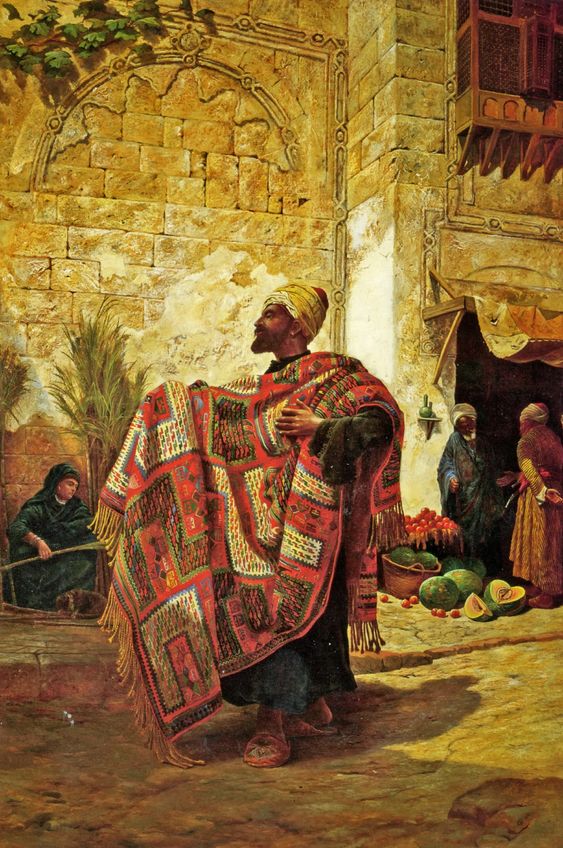
The possibility of producing goods and exporting them to distant lands was a factor that helped in the expansion of economic development along the trade routes. However, it also allowed artists to expand their creativity by accessing materials such as silk, wool, cotton, and rug dyes that were unavailable locally. It also meant the expansion of cultural exchanges and the possibility of acquiring new techniques and skills. However, in many cases, as with the techniques of the Persian rug centres, it also meant the need to protect their trade secrets.
The Silk Road was the most crucial event in the history of the rug trade. It led to the creation of an extraordinary variety of fine rugs of unsurpassed quality that we know today. Now, you can find Oriental and Persian rugs for almost every taste or style, and it all started with the establishment of the Silk Road’s trade routes nearly two thousand years ago.
We encourage you to appreciate our rug collection’s magnificent colours and designs for your home or office. You can discover the passion for this fantastic work of art just as the first Europeans were attracted when they saw it for the first time. With so many different and unique works of art, it is tough to resist them.
What did Persia trade on the Silk Road?
Persia sat at the crossroads of the Silk Road: every land route between China and the Mediterranean crossed the Iranian plateau. That position made Persia far more than a corridor — it was producer, manufacturer and middleman at once, and the question of what Persia actually traded has a richer answer than the road’s name suggests.
Goods that left Persia
Persian workshops sent out finished silk textiles and brocades — the famed Sassanid silks were imitated from Byzantium to Japan — along with hand-knotted carpets and other woven goods, silver vessels and fine metalwork, glassware, pearls from the Persian Gulf, turquoise from Nishapur, saffron, rosewater and perfumes, dyes such as madder, dried fruits like dates and pistachios, and fine horses bred on the plateau. These were not raw commodities but the products of workshops with centuries of accumulated craft — which is precisely why they travelled so far.
The middleman of silk itself
Raw silk came from China, but for centuries Persia controlled its flow westward. Parthian and then Sassanid Persia held a near-monopoly on the transit trade, buying Chinese silk at the eastern frontier and selling it to the Roman and Byzantine world at a premium — often after Persian looms had rewoven it into far more valuable patterned cloth. The dependence stung so much that around 552 AD monks famously smuggled silkworm eggs to Byzantium to break it. Along the route itself, merchants of the Iranian world — above all the Sogdians, whose language became the lingua franca of the caravan cities — carried the trade deep into Central Asia and China. And Persia did not remain a mere broker: by Safavid times it was a leading silk producer in its own right — Shah Abbas made raw silk a crown monopoly and entrusted much of its export to the Armenian merchants of New Julfa.
And what came back
In exchange, the caravans brought Chinese raw silk and porcelain, paper — which reached the Islamic world through Samarkand — jade, and spices from India. Decisively for rug lovers, they also brought motifs: the cloud band, the lotus and the peony entered the Persian repertoire, especially after the Mongol period, and never left it. Trade in goods was always trade in ideas as well.
By the Safavid era this network had matured into a true export industry for carpets — the story of the First Golden Age of Persian carpets — and silk itself completed its journey from trade good to the noblest material of the loom: see what makes silk rugs exceptional and how to identify real silk.
Quick answers
What goods did Persia trade on the Silk Road? Outbound: finished silk textiles and brocades, hand-knotted carpets, silverwork, glass, Persian Gulf pearls, Nishapur turquoise, saffron, perfumes, dyes, dried fruits and fine horses. Inbound: Chinese raw silk and porcelain, paper, jade and Indian spices.
Did Persian rugs travel the Silk Road? Yes — as merchandise, as diplomatic gifts and as the caravans’ own furnishings. The route also carried designs in both directions, and by Safavid times carpets had become a state-sponsored export industry.
Why was Persia so important on the Silk Road? Geography and craft. Every westward land route crossed Persian territory, so Rome and Byzantium could reach Chinese silk only through Persian hands; and Persia transformed what passed through it, turning raw silk into precious cloth and its own workshops’ goods into exports the whole route desired.
Antique rugs in the Figalli collection
The pieces in the Figalli catalogue are late chapters of this same story — hand-knotted rugs from the weaving centres that the Silk Road made famous, chosen one by one for their art, their dyes and their state of preservation.
Related reading: Kerman – A Persian Garden inside your home · Ardabil, the most famous carpet in the world · Are Heriz and Serapi identical rug types, or do they exhibit differences? · What is abrash? How to identify it? · Introduction to the World of Antique Oriental Rugs