
You measured the room, arrived at a round number, and now you are looking for it: 2×3, 2.5×3.5, 3×4 m - roughly 6'7" × 9'10", 8'2" × 11'6" and 9'10" × 13'1". In an antique rug that number does not exist. It is worth understanding why, because it changes how you search and usually ends in a better result than the one you set out for.
Why there is no exact 2×3 m (6'7" × 9'10")
A machine-made rug comes from a mould: the loom is given the measurement and returns the measurement. An antique rug comes from a loom built by hand, often on the floor of a house, and grows knot by knot over months. The weaver was not making a catalogue product, he was making a piece. The width is that of the loom he had, and the length is where the piece ended.
That is why the real measurements are 218×315, 233×302, 197×483. Numbers no shop would choose, and exactly what makes each piece singular.
The range that replaces the exact measurement
The practical way out is simple: stop looking for a number and start looking for a range. If your space calls for something around 2×3 m (6'7" × 9'10"), any piece between roughly 190 and 230 cm (6'3" to 7'7") wide by 280 to 330 cm (9'2" to 10'10") long will work, and a difference of ten or twenty centimetres disappears once the furniture is in place.
And if you have to be wrong, be wrong on the small side. A slightly smaller rug, centred, with bare floor showing around it, looks deliberate. A rug that is too large, running into the skirting boards or under doors, gives the mistake away every day.
The ranges in the collection
Antique pieces fall into four groups, and knowing which one you are in shortens the search considerably.
Small pieces, up to about 3 m². They are the greater part of any antique collection. They work beside a bed, in an entrance, under a coffee table, or hung on a wall. This is where the finest tribal weaving and the most accessible prices are.
Medium pieces, 3 to 6 m². The size of an apartment living room and of a main bedroom. It is the most contested range and the one that turns over fastest.
Large pieces, above 6 m². A wide living room, or a dining room with the whole table on the rug. They are rarer, because they required a large loom and months more work, and the largest in the collection are collector pieces.
Runners. Narrow and long, for hallways and entrances. They follow a logic of their own, set out in antique runner rugs for hallways and entryways.
Large pieces in the collection
-
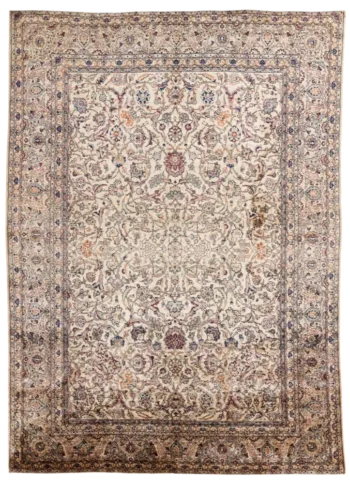
Kashan Silk – Central Persia
218 × 315 cm7'2" × 10'4"$ 15,800 -
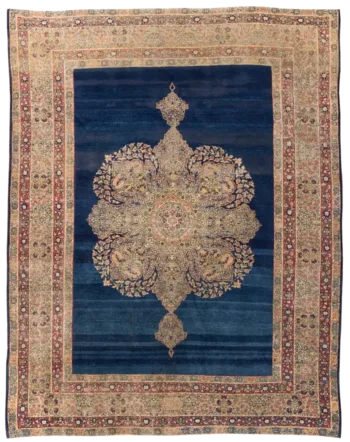
Kerman Lavar – South Persia
233 × 302 cm7'8" × 9'11"$ 23,000 -
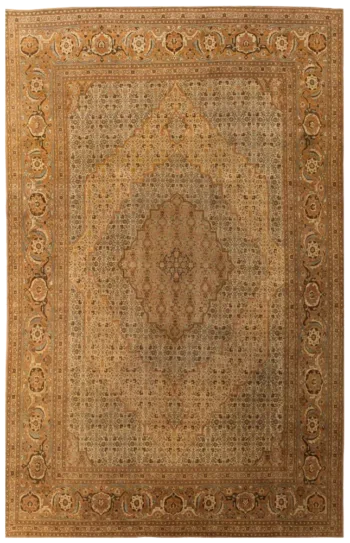
Tabriz – Northwest Persia
303 × 466 cm9'11" × 15'3"$ 23,000 -
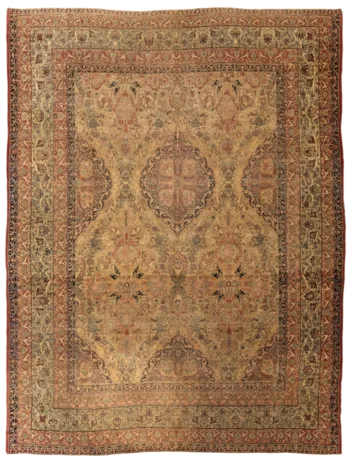
Kerman Lavar – Southern Persia
312 × 414 cm10'3" × 13'7"$ 24,000 -
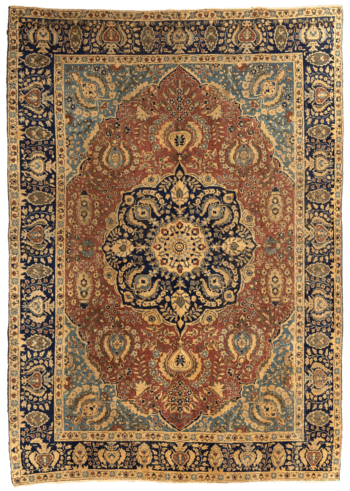
Tabriz – Northwest Persia
230 × 321 cm7'7" × 10'6"$ 24,000 -
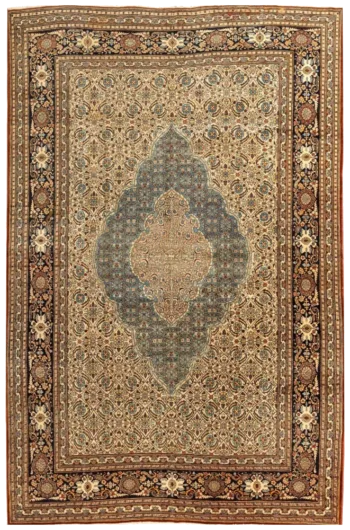
Tabriz – Northwest Persia
206 × 326 cm6'9" × 10'8"$ 12,000 -
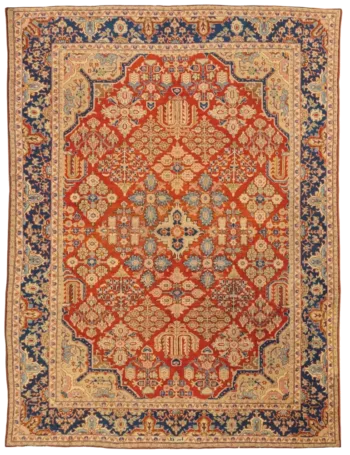
Lilihan – West Persia
275 × 370 cm9'0" × 12'2"$ 20,000 -
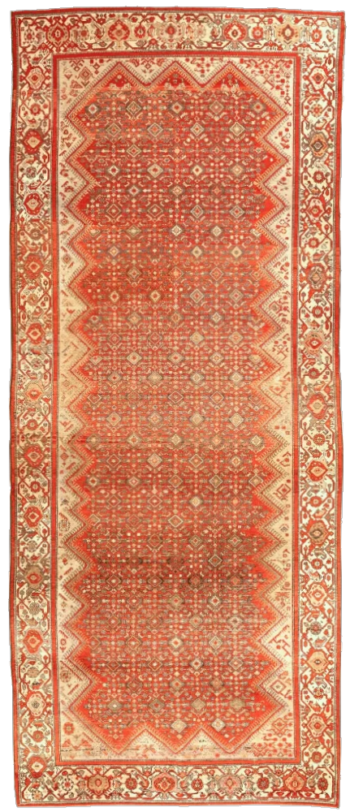
Malayer – Northwest Persia
197 × 483 cm6'6" × 15'10"$ 12,000
The largest pieces in the collection, above 12 m², are sold on request and appear without a price in the catalogue. If that is what you are looking for, write to me directly.
How to shorten the search
Measure the space the rug will occupy, take a photograph of the room, and send me both on WhatsApp. With the measurement in hand I can set aside what fits, instead of you going through the whole catalogue guessing.
For the right margin in each room, see how to position and choose the size room by room, or go straight to the living room, the dining room and the bedroom. To see everything, the full catalogue is here.