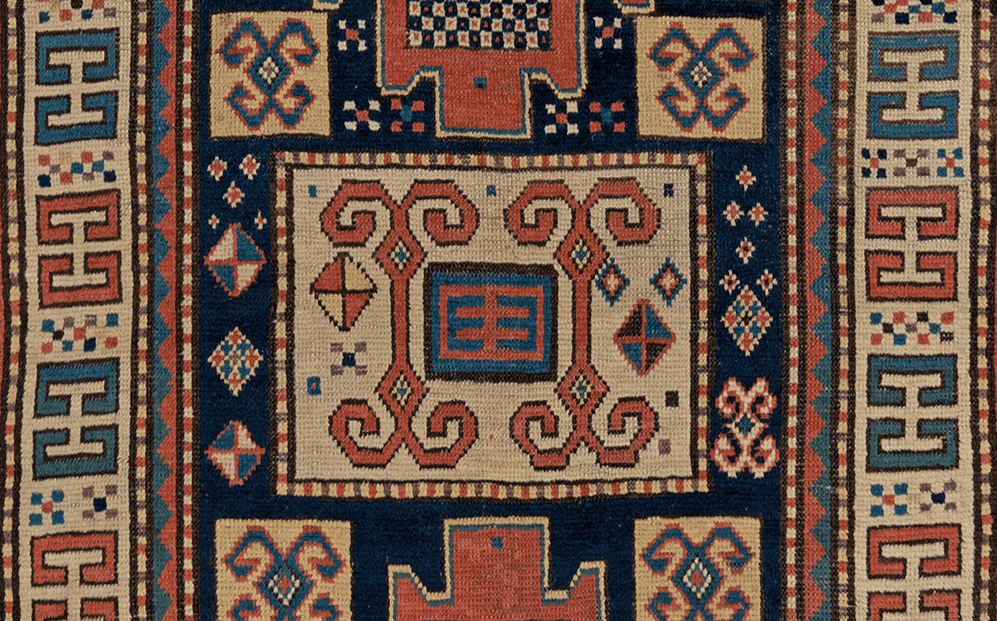
Wheel of Life: Appearing over time in countless cultures, this ancient design shows the ever-changing and cyclical nature of life. The people of the Caucasus believed that life events were not random, but could help a person mature. The hooks that surround the wheel are associated with the dragon figure. Often, small stars were placed inside the wheel, perhaps to demonstrate the potential fruit that comes from facing life’s events with balance and dignity.

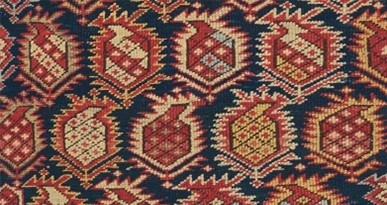
Botéh: The botéh is sometimes interpreted as a flame. Among Caucasian artists, it was often considered analogous to a sprouting seed and is considered the “seed of life.” The botéh represents the ever-present potential for growth and regeneration. The botéh may contain a plant within its design, indicating that the whole always exists within the part. Learn more about botéh design here.
Ram’s Horn: sheep and rams were a vital source of warmth and comfort, as well as being fundamental to the sustenance of a group. Its wool was the main material used in weaving ancient Caucasian carpets, a prestigious activity. Throughout history, the ram’s horn has been used to bring the group together into one collective. The ram’s horn is strength, power and fertility, suggesting that life itself is not temporary, but eternal.
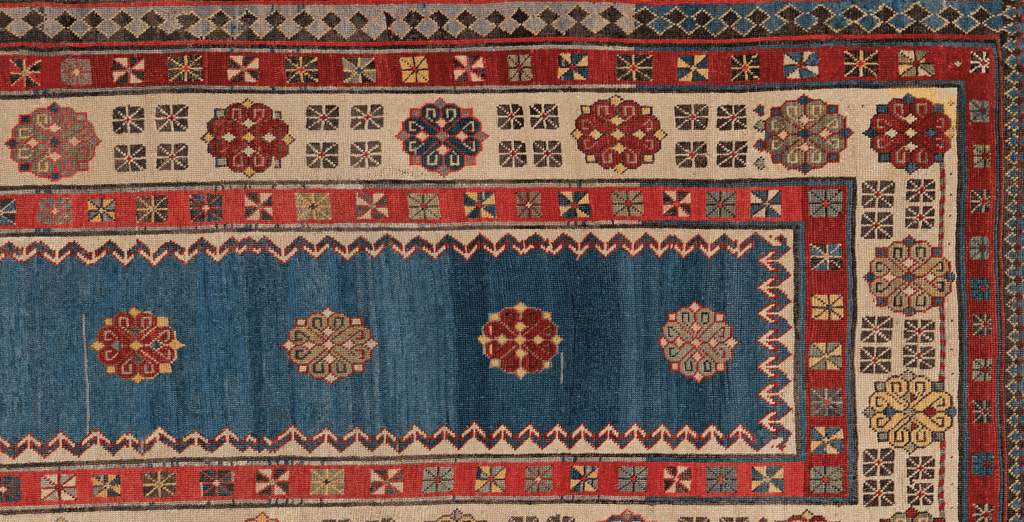
Rose: the rose is the most enchanting and inspiring of flowers. The rose design featured on a rug indicates that when cultivated by man’s creative energy, nature becomes more refined and purified than it was in its primordial state. This is only possible through a harmonization of man’s knowledge with the inner warmth of his heart and a sensitivity to the laws that govern nature.
S-Shaped Motif: The S-shape pattern relates to the design of the dragon, the masculine or celestial principle of life. It is also considered by some to be the life-giving force of the sun. The sun has the attribute of shining eternally and always nourishing all things without discrimination. This may be why small S motifs are often scattered throughout the field of an antique Caucasian rug. The sun is also a center of enlightenment, which man can achieve through his inner development.
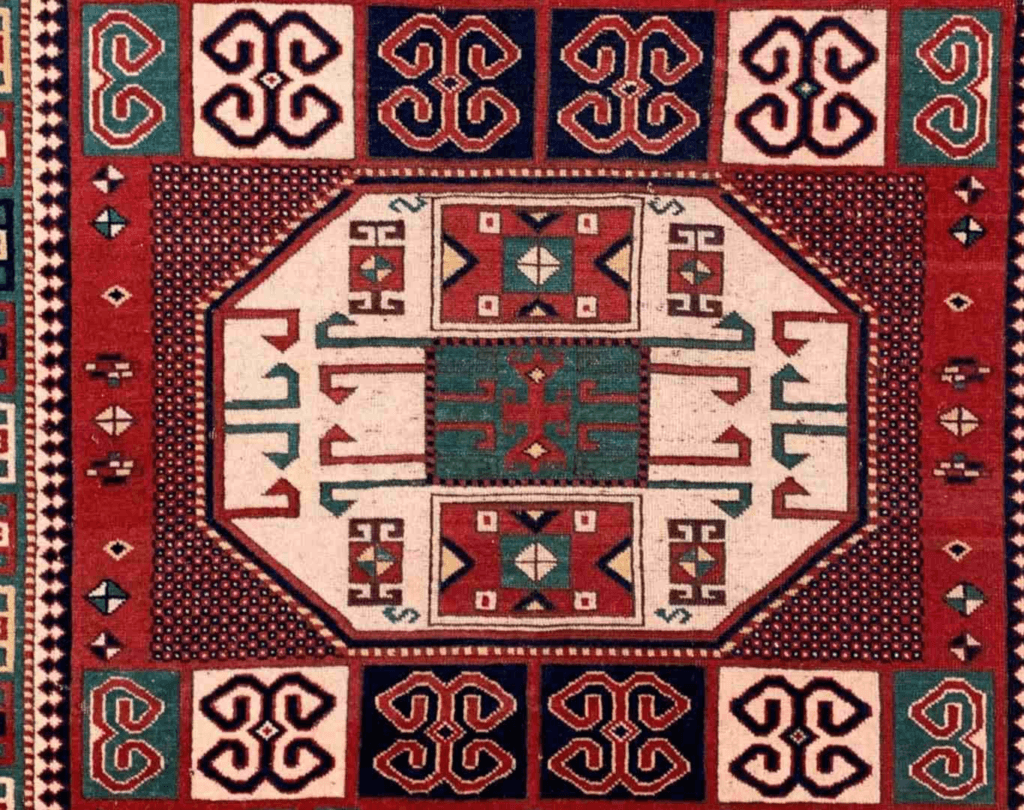
Star of Wisdom: the eight-pointed star appears in cave drawings and probably dates back to the beginnings of humanity. This motive is man’s potential for inner wisdom and understanding. Ancient Caucasian carpet weavers believed that wisdom was the true wealth that could be obtained through the effort one made amid the many challenges of daily activities.
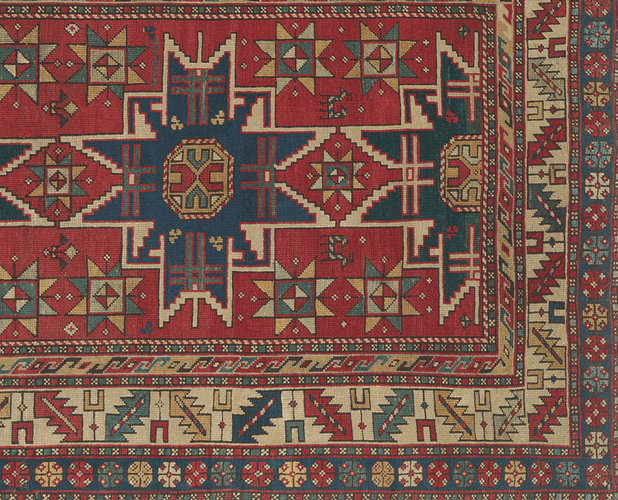
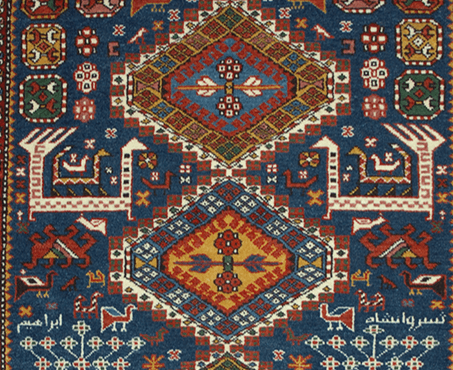
Dragon: In the Eastern world, the dragon is the celestial influence that is always present on Earth. It is the masculine or cosmic element, the active principle that animates life and can be seen in all things. It is often featured on a rug in relation to the phoenix, which is the feminine element or earth. This receptive principle embodies life and encourages it to grow. In the ancient Chinese court, the emperor wore a dragon on his clothing and the empress wore the phoenix. The dragon and the phoenix can also be interpreted as the possibility of union between the mind and heart of man.

Running water: Both the nomadic pastoralists and the ancient agrarian carpet weavers of the Caucasus considered everything that nourished life sacred. Water was absolutely necessary to sustain and nourish life. The edge of running water around a carpet represents the vital quality of water for both people and animals. It is also the possibility of inner purification.

Peacock: the peacock has a lineage associated with nobility and abundance. Their colorful plumes are majestic and suggest a level of beauty and splendor that is both heavenly and yet manifest on earth. Caucasian people believed that this same glow also exists in the depths of the heart.
The symbols of Caucasian rugs and what they mean
A Caucasian rug is written in a geometric alphabet. For centuries the weavers of the Caucasus — Armenian, Azeri and mountain villagers between the Black and Caspian Seas — knotted the same protective and life-affirming signs into their rugs, passed from mother to daughter. The meanings were rarely written down and are often debated, but the motifs below are the ones you will meet again and again, and knowing them changes how you read a rug.
Signs of protection
The eight-pointed star (sometimes called Solomon’s star) is the great emblem of the Caucasus — traditionally read as protection and spiritual guidance. Latch-hooks — the small hooks that outline almost every Caucasian form — and the “running dog” border are guardian motifs, meant to snag and turn away harm. The comb stands for cleanliness and, with it, protection against the evil eye; the amulet or triangle (muska) is worn against that same eye. The scorpion is woven not to threaten but to ward off the real creature, and the dragon — the great “S” of the famous dragon rugs of Kuba and Shirvan — is the guardian of treasure and water.
Signs of life and fertility
The ram’s horn (koçboynuzu) speaks of fertility, heroism and power. The tree of life joins earth to heaven and stands for immortality. Zig-zag running water is life and movement; a bird or peacock is good fortune and the soul (the phoenix of the dragon-and-phoenix pairing). The boteh, the little seed-or-flame shape, carries fertility and life across the whole Persian and Caucasian world — see our guide to the meaning of the boteh.
Signs of identity
The large medallion or gul at the centre of a rug is a tribal emblem — a family’s or village’s signature. The cruciform shield medallion of the Sevan Kazak and the radiating sunburst of the Chelaberd (“Eagle Kazak“) identify a piece at a glance, while the cloud band, borrowed from China along the Silk Road, marks the sky and the infinite. These district drawings are exactly what lets you name a rug — see how to recognise a Kazak and the charm of antique Caucasian rugs.
Quick answers
What do the symbols on a Caucasian rug mean? Most fall into three families: protection (eight-pointed star, latch-hooks, comb, scorpion, dragon), life and fertility (ram’s horn, tree of life, running water, bird, boteh), and tribal identity (the central medallion or gul, and district drawings like the Sevan shield). The exact readings vary by village and are partly interpretive.
What does the eight-pointed star mean? It is the signature motif of the Caucasus, generally read as protection and spiritual guidance. It appears as a central medallion, a border element and a small filler alike.
Are the symbols the same all across the Caucasus? The vocabulary is shared, but each district favours its own forms and colours, so the same idea — protection, say — may be drawn very differently in a Kazak, a Shirvan or a Kuba rug.
Caucasian rugs in the Figalli collection
You can read these symbols on the antique Caucasian pieces in the collection — among them a Shirvan from the south-east Caucasus, a Karabagh and several Kazaks. See them all in the Figalli catalogue.
More Caucasian weaves: how to recognise a Gendje, a Shirvan and a Lesghi.
Related reading: Discover the cultural and artistic values of the Caucasian Kazak rugs · The irresistible charm of ancient Caucasian rugs · How to Recognise a Lesghi Rug · Understanding the Rug’s Backside · What does the term antique mean in the world of rugs?
Caucasian rugs available at Figalli
-
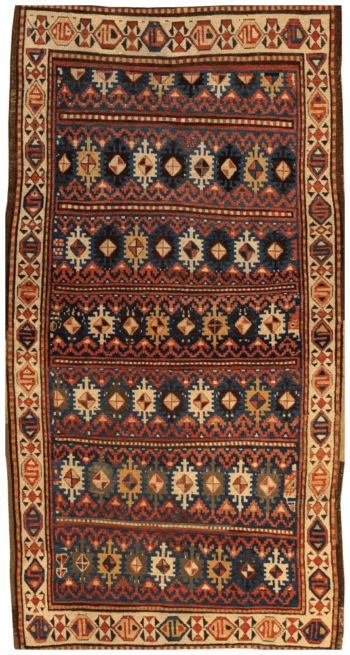
Armenian Kazak – Central Caucasus
114 × 220 cm$ 6.000 Buy -
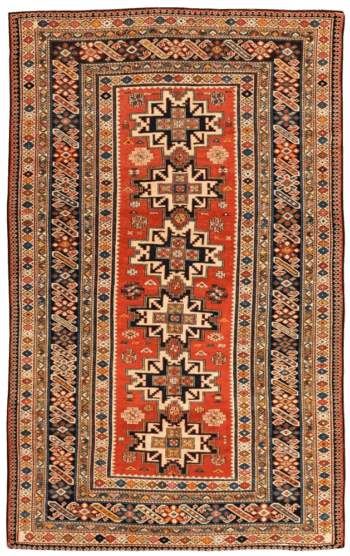
Chichi – Kuba, Northeast Caucasus
137 × 220 cm$ 5.800 Buy -
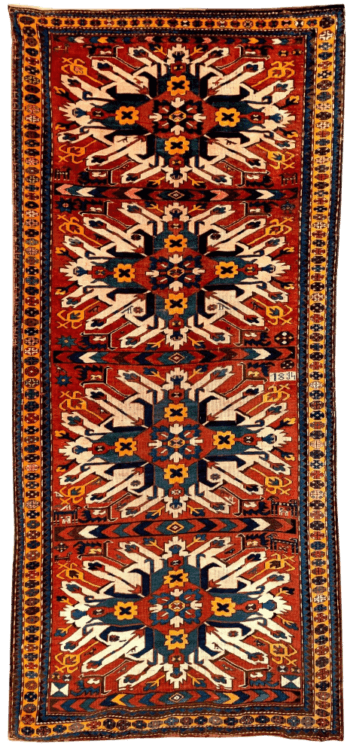
Eagle Kazak – Karabagh, South Caucasus
142 × 292 cm$ 18.000 Buy -
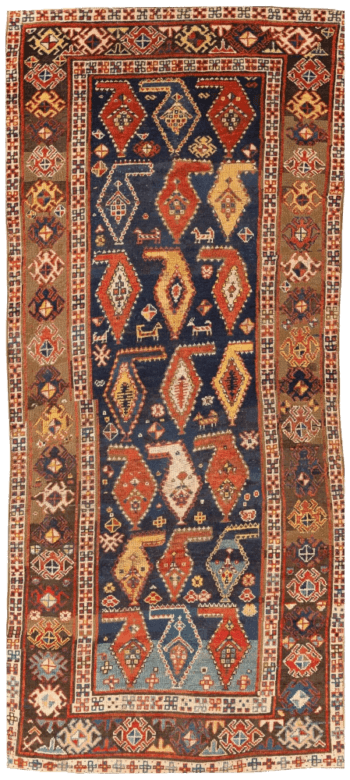
Karabagh – South Caucasus
107 × 245 cm$ 9.000 Buy -
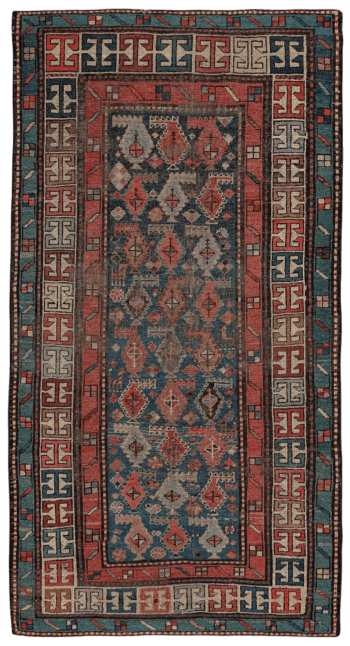
Karabagh – South Caucasus
95 × 181 cm$ 5.000 Buy -
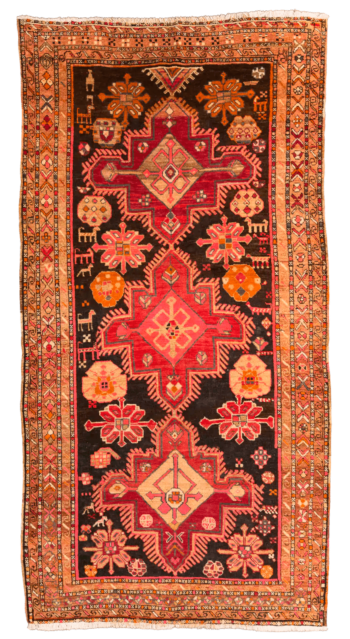
Karabagh – South Caucasus
132 × 273 cm$ 8.000 Buy -
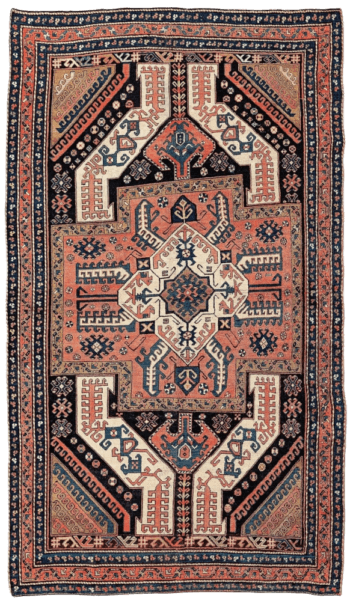
Kassim Ushag – Karabagh, South Caucasus
148 × 255 cm$ 6.300 Buy -
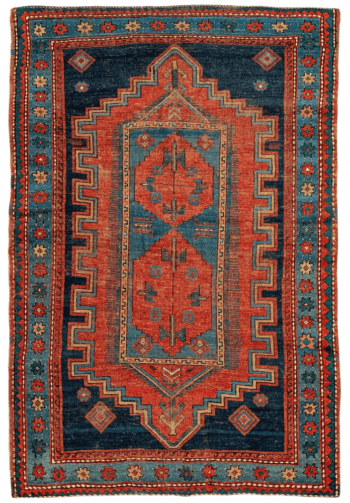
Kazak – Central Caucasus
110 × 173 cm$ 3.700 Buy -
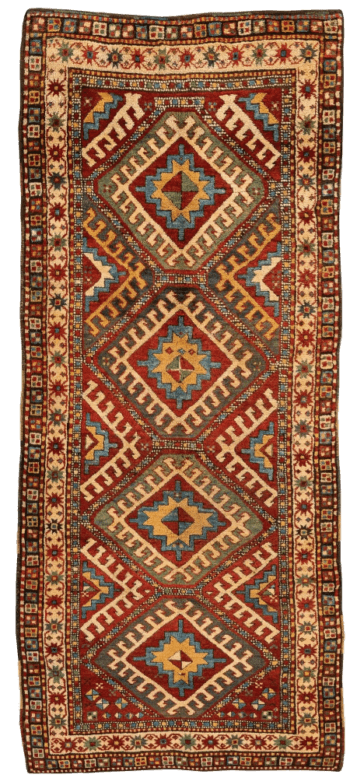
Kazak – Central Caucasus
104 × 274 cm$ 7.900 Buy -
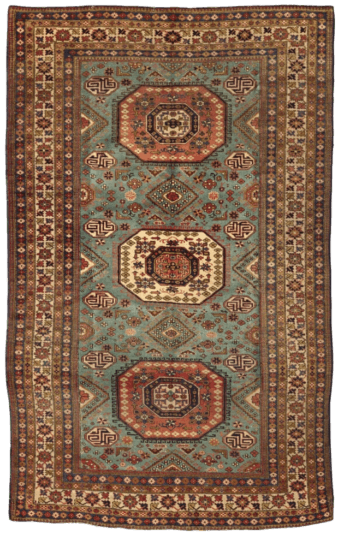
Kazak – Central Caucasus
178 × 254 cm$ 4.000 Buy -
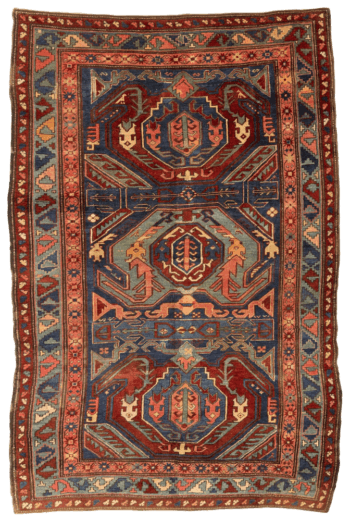
Lenkoran – Karabagh, South Caucasus
158 × 260 cm$ 16.500 Buy -
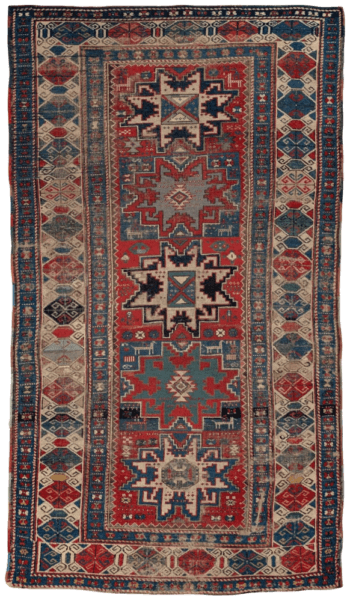
Lesghi – Dagestan, Northeast Caucasus
130 × 225 cm$ 13.500 Buy -
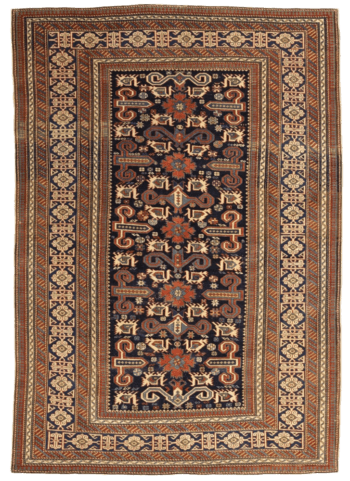
Perpedil – Kuba, Northeast Caucasus
138 × 200 cm$ 8.400 Buy -
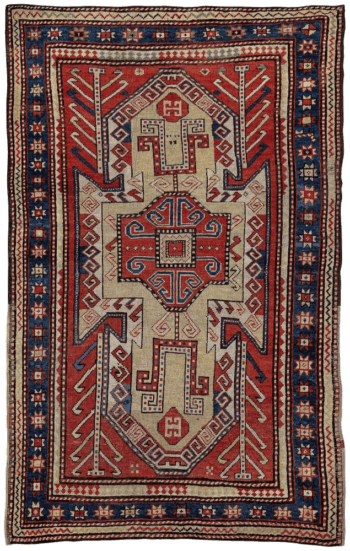
Sewan – Kazak, Central Caucasus
95 × 200 cm$ 7.500 Buy -
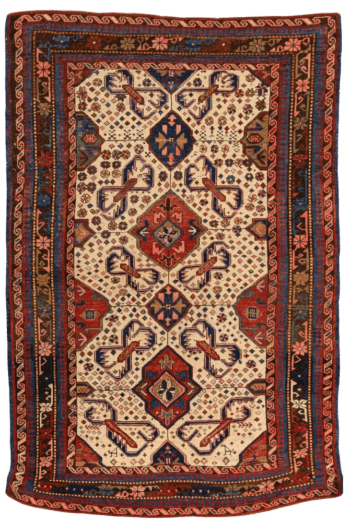
Seychour – Kuba, Northeast Caucasus
131 × 199 cm$ 5.200 Buy -
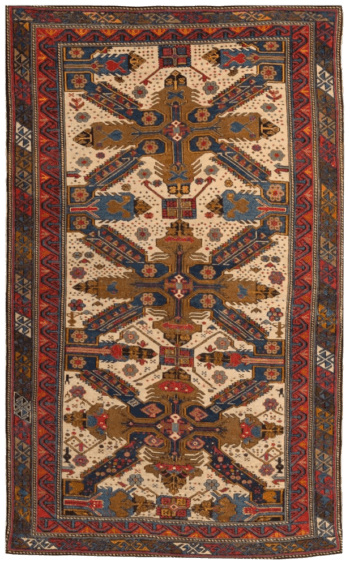
Seychour – Kuba, Northeast Caucasus
127 × 206 cm$ 12.000 Buy -
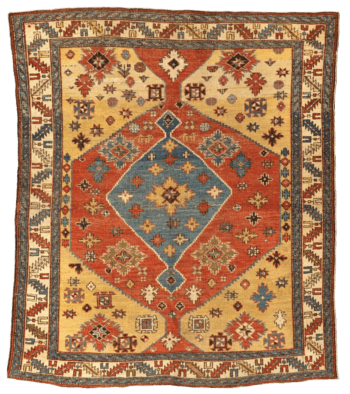
Shirvan – Southeast Caucasus
114 × 115 cm$ 10.000 Buy -
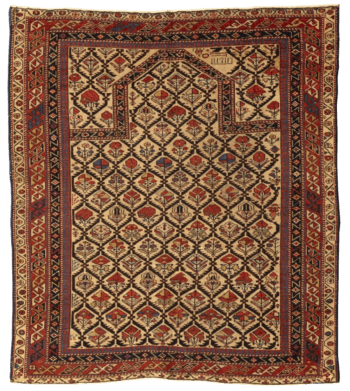
Shirvan – Southeast Caucasus
112 × 132 cm$ 11.000 Buy -
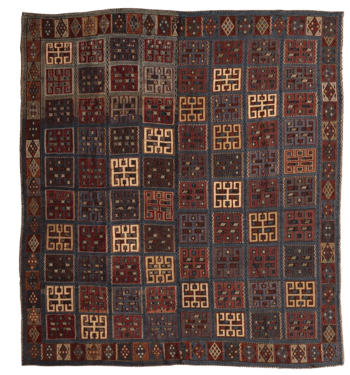
Verneh – Karabagh, South Caucasus
168 × 196 cm$ 5.200 Buy -
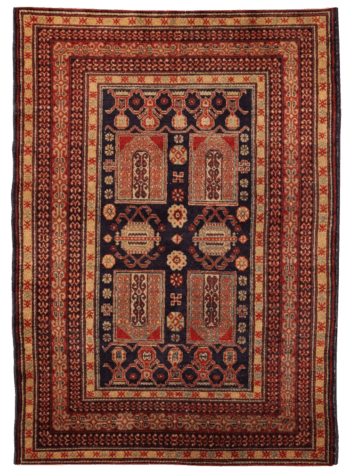
Yerevan – South Central Caucasus
108 × 135 cm$ 3.500 Buy